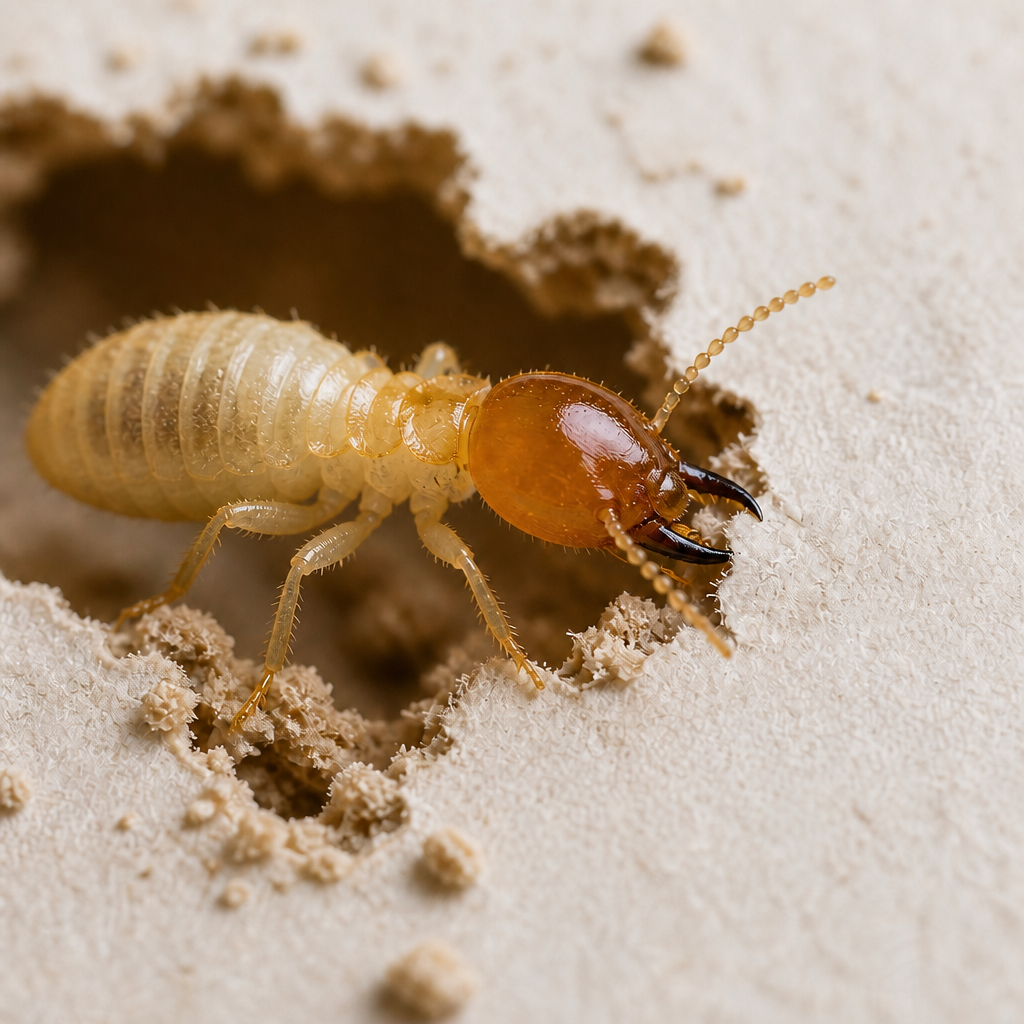
Termites survive on a diet built almost entirely around cellulose. The tough, fibrous material found in wood and many plant-based products. Their digestive systems, powered by specialized microbes, allow them to break down cellulose in ways most other creatures can’t. Because of this, anything containing wood, paper, cardboard, or plant fibers becomes a potential food source. In Tucson, desert landscaping and wooden structural components are common. This gives termites plenty of opportunities to feed both outdoors and inside homes.
Beyond structural lumber, termites also consume dead trees, mulch, roots, leaf litter, and even living plants when moisture conditions allow. Subterranean termites, the most common species in Southern Arizona, prefer damp or decaying wood because it’s easier to chew and richer in accessible nutrients. This is why moisture issues, leaky pipes, poor drainage, or wet soil against the foundation can dramatically increase termite activity around a property.
Inside homes, termites will quietly eat baseboards, framing, flooring, drywall paper, cardboard boxes, books, and stored paper goods. They don’t stop at wood; the paper backing on drywall and insulation is fair game, too. Because they feed from the inside out, damage often goes unnoticed until it becomes severe. Understanding what termites eat helps explain why they’re so destructive and why consistent monitoring and prevention are essential in a place like Tucson, where termite pressure stays high year-round.
When is the last time you received a termite inspection for your home? If it has been a while, I would urge you to do so right away. Essential Pest Control offers courtesy inspections, so schedule today! 520-886-3029. You can also set up your appointment here. Tucson Termite Control - Essential Pest Control
Have an Emergency?
CALL US (520) 886-3029