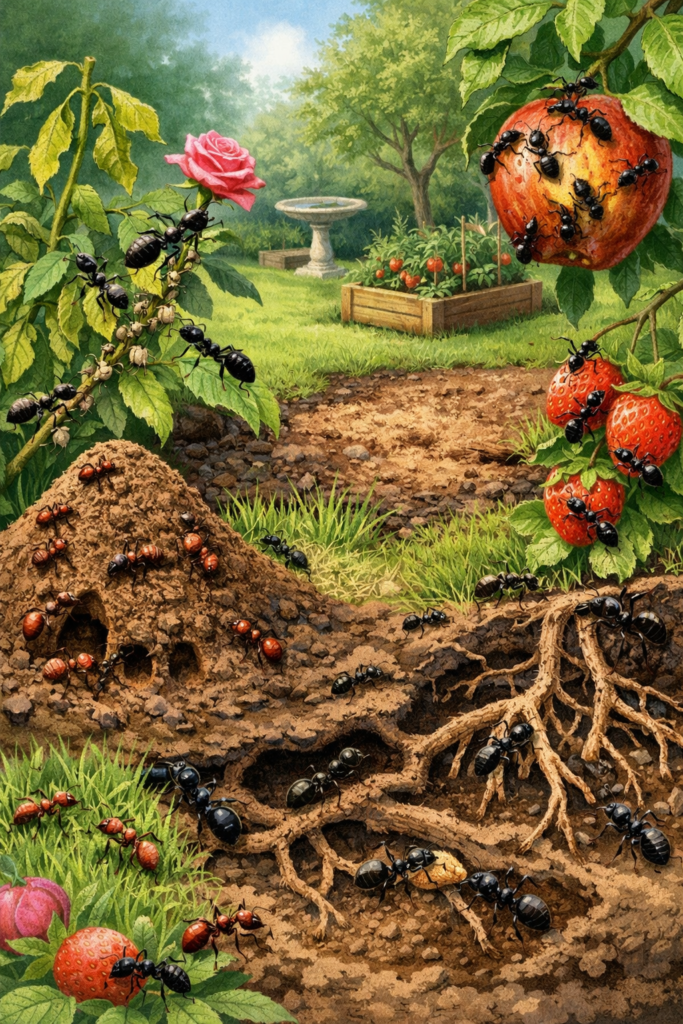
Ants can quietly undermine the health of a yard by disrupting the soil structure that plants depend on. As colonies expand, ants excavate tunnels that loosen the soil too much. This causes root systems to lose stability and moisture to drain away faster than plants can absorb it. In Tucson’s already dry climate, this accelerated drying can stress grass, ornamentals, and young trees. This can leave patches of the yard thin, wilted, or completely bare. Over time, the constant churning of soil can create uneven ground and small mounds that interfere with irrigation patterns.
Their presence also attracts and protects other pests that damage vegetation. Many ant species “farm” aphids and scale insects, guarding them from predators in exchange for the sugary honeydew they produce. Those sap‑sucking insects weaken plants, stunt growth, and cause leaves to yellow or drop prematurely. As the ant population grows, so does the aphid population, creating a cycle of stress that can spread across shrubs, roses, fruit trees, and garden beds. What starts as a few ant trails can quickly turn into widespread plant decline.
Some ant species directly harm lawns by building large mounds or aggressively foraging through turf. Fire ants, for example, create hardened mounds that smother grass and make areas of the yard unusable for pets or children. Other species chew through seeds, roots, or tender shoots, preventing new growth from taking hold. When multiple colonies establish themselves, the combined impact can transform a healthy yard into a patchwork of dead spots, weakened plants, and soil instability—making professional treatment essential to restore balance and protect the landscape.
If you are having ant issues in your yard and would like to take care of the problem, Give Essential Pest Control a call. 520-886-3029. You can also visit our website. EssentialPest.com
Have an Emergency?
CALL US (520) 886-3029